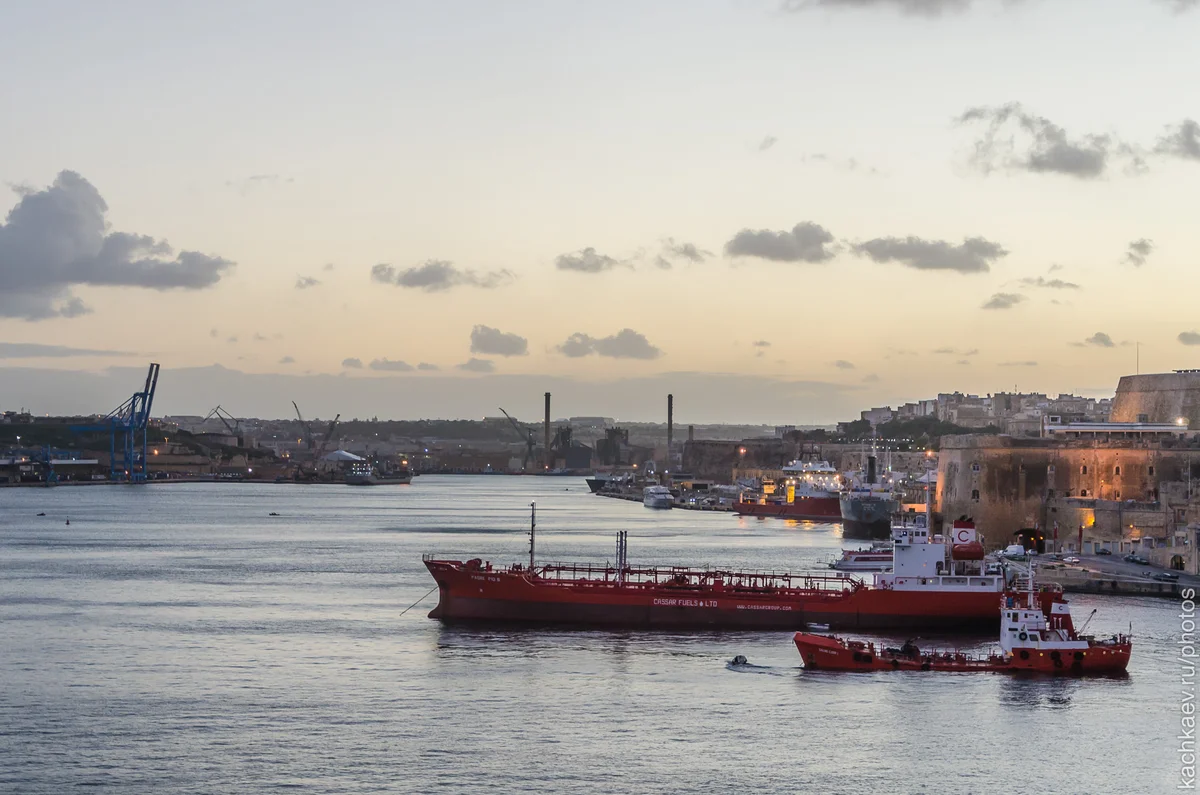
Malta no longer sells citizenship. The programme that did — Citizenship by Naturalisation for Exceptional Services by Direct Investment, universally shortened to MEIN — was repealed on 24 July 2025. It was the last such scheme inside the European Union, and its closure means there is now no route anywhere in the EU by which a fixed payment produces a passport.
What the Court actually decided
On 29 April 2025 the Grand Chamber of the Court of Justice of the European Union delivered judgment in Commission v Malta (Case C-181/23). The Court held that a member state may not grant its nationality — and therefore Union citizenship, which follows automatically — in exchange for predetermined payments or investments. Doing so, it found, treats the status of Union citizen as a commercial product and breaches the duty of sincere cooperation in Article 4(3) of the Treaty on European Union.
The reasoning matters more than the outcome, because it is not confined to Malta. Nationality remains a competence of each member state; what the Court restricted is the commercialisation of it. A scheme is caught where the grant turns on a payment rather than on a genuine connection to the country. That framing forecloses the obvious workaround of relabelling a contribution, and it is why nobody expects a replacement programme elsewhere in the Union.
Programme dossier
Malta — investment routes, passport strength & full analysis
What Malta did in response
Malta complied quickly. The Maltese Citizenship (Amendment) Act, Act XXI of 2025, was approved by Parliament and published in the Government Gazette on 24 July 2025. It removed the exceptional-services-by-investment framework from the Citizenship Act altogether, deleting the statutory basis on which a contribution could be exchanged for naturalisation.
In its place the Act introduces a discretionary merit route. The responsible minister may grant citizenship to a person who has rendered exceptional services or made an exceptional contribution to Malta or to humanity — with scientists, researchers, athletes, artists, entrepreneurs, philanthropists and technologists named as the sort of candidates contemplated.
Read the difference carefully, because it is the point on which readers are most likely to be misled. The merit route has no threshold, no schedule and no entitlement. There is no sum that qualifies you, no application you can file with a cheque, and no timeline anyone can promise. It is a discretionary honour, not a priced product. Anyone presenting it as MEIN under a new name is either mistaken or selling something.
What is still available in Malta
The Malta Permanent Residence Programme is unaffected and remains open. It grants permanent residence and Schengen free movement, and it is a genuine, purchasable route with published thresholds — a government contribution plus a property purchase or qualifying lease. What it does not do, and never did, is confer citizenship or lead automatically to it.
That distinction is the one to hold onto. A residence card lets you live in Malta and move within Schengen. A passport confers Union citizenship, the right to live and work in any of the 27 member states, and a vote. The gap between them is exactly what buyers were paying MEIN's premium for, and it is the gap that no longer has a bridge you can buy. Ordinary naturalisation, on the standard residence and integration requirements that apply to everyone, is what remains.
What this means if EU citizenship was the objective
The realistic path is now residence first, naturalisation later, on the ordinary rules. Portugal remains the most-used version of that: a qualifying residence permit, held with modest physical presence, leading to naturalisation eligibility after five years. Ireland, Spain and Greece all offer variants on the same shape. None of them is fast, and all of them require you to actually hold residence for years rather than to write a cheque.
Anyone who tells you otherwise is describing a market that closed in July 2025. If a proposal you are shown quotes a contribution figure and a months-to-passport timeline inside the EU, that is now sufficient on its own to walk away.
The wider direction
The Caribbean programmes are under related pressure from a different direction. Five of them — Dominica, Grenada, Saint Lucia, Antigua and Barbuda, and Saint Kitts and Nevis — face a European demand to wind down citizenship by investment by 1 June 2028 or risk visa-free access to the Schengen area. Those programmes are open today, and their minimums rose sharply under the regional price floor, but their principal selling point is European access and that access is what is being used as leverage.
The pattern across both is the same. Citizenship by investment is not being outlawed globally; it is being separated from European rights. Programmes whose value rested on European access are the ones repricing or closing. Programmes bought for other reasons — a genuine second base, a tax position, a hedge against a single point of political failure — are affected far less.
Full programme dossier
Malta— investment requirements, passport strength & suitability analysis
● Programme change-alerts
Get alerted if Malta changes
We'll email you the moment Malta's terms shift — plus the monthly intelligence brief. Free.
Free account, unsubscribe anytime. We never sell data — and never sell ratings.
Ready to explore your options?
Our verified advisors cover every programme in our intelligence database.